

Project updates that get straight to the point help busy stakeholder teams make decisions faster. By structuring updates around signal, context and action, you give senior leaders exactly what they need in one clear read. With over 30 years working alongside owners and principals, we’ve seen how this approach cuts through noise and links progress, governance and next steps. In this post, you’ll see how decision-ready reporting can sharpen your updates and boost your team’s confidence to act quickly. For further insights, check out these stakeholder communication strategies.
Decision-Ready Reporting Framework
The ability to deliver concise and actionable updates is crucial for decision-making. Let’s delve into how the Signal, Context, and Action framework can transform your project communications.
Understanding the Signal
The signal is the core change or update. It’s what you need to communicate clearly to stakeholders. Think of it as the headline in a newspaper: it catches attention and tells the reader what has changed. By spotlighting the signal, you ensure that your stakeholders understand the critical points immediately.
When crafting your signal, focus on specific data or events that impact the project. For example, if a milestone has been achieved or a schedule has shifted, state it upfront. Numbers are your ally here: “The project moved 10% ahead of schedule last week.” This clarity helps busy stakeholders stay informed without sifting through unnecessary details.
Context Matters
Once you’ve identified the signal, provide the context. This explains why the signal matters. Context gives the background needed to understand the significance of the change. It relates the signal to the project goals or potential impacts on timelines and budgets.
Context answers the “why” questions. For instance, if a particular phase of a project is delayed, explain the reasons—perhaps external factors like weather conditions or supply chain disruptions. This explanation allows stakeholders to grasp the implications fully. Rich context is pivotal in making informed decisions.
Actionable Insights
Finally, outline the actionable insights. This is where you specify what needs to happen next. It’s not enough to just present information; you must guide your stakeholders on the steps forward.
Actionable insights should be clear and direct. For example, “To mitigate schedule delays, allocate additional resources to the construction phase.” Such insights turn passive updates into active guides for stakeholders. They know exactly what actions to take, ensuring the project moves forward efficiently.
Benefits of Structured Project Updates
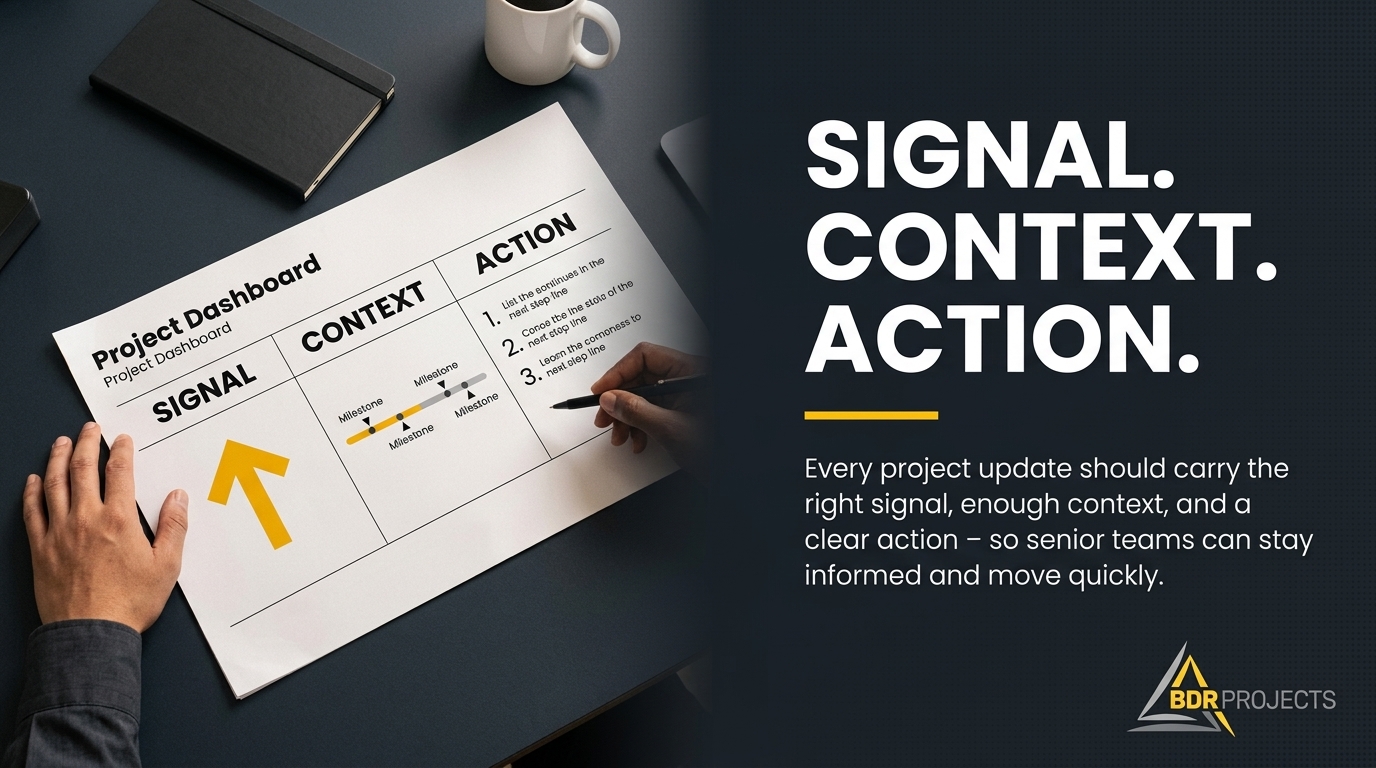
Structured updates streamline communication, helping stakeholders make informed decisions quickly. Let’s explore how this enhances project governance and decision-making.
Enhancing Stakeholder Decisions
A well-structured update provides clarity. When stakeholders receive updates in a consistent format, it reduces their cognitive load. They can see the change, understand the context, and act on it without delay. This method significantly boosts decision-making speed.
Stakeholders often juggle numerous projects. By presenting updates clearly and concisely, you make it easy for them to prioritise. They trust the information and are more likely to engage actively. This engagement leads to more confident and timely decisions, benefiting the project as a whole.
Streamlining Governance and Assurance
Governance and assurance thrive on clarity and precision. When updates communicate the signal, context, and action succinctly, it supports governance frameworks, ensuring compliance and oversight. The structured approach lays out clear governance pathways, supporting decision-making and project assurance processes.
This clarity also means fewer miscommunications and misunderstandings, leading to smoother project operations. With solid governance in place, you can ensure that projects align with strategic goals, maintaining the integrity and direction of the work, while supercharging stakeholder communication.
Implementing the Three-Part Standard
Adopting this reporting standard requires a shift in how updates are crafted and delivered. Here’s how to make it work for your team.
Adapting to Principal-Side Project Management
Principal-side project management benefits greatly from clear communication. By implementing this three-part structure, project leaders can ensure that every update is decision-ready. It helps align team efforts with project objectives, ensuring everyone works together efficiently.
To adapt, start by training your team on the framework. Encourage them to distill updates into signal, context, and action. This practice helps engrain the method and makes it a natural part of your project management process. Teams that master this approach see significant improvements in communication and stakeholder engagement.
Tools for Effective Progress Reporting
Utilising the right tools can enhance your reporting capabilities. Tools that support structured communication, like project dashboards or AI-enabled reporting systems, can facilitate clearer updates. These tools help present information in a user-friendly way, enabling stakeholders to absorb the information quickly.
Look for tools that allow integration with existing systems, ensuring seamless communication across platforms. By leveraging technology effectively, you can maintain clarity and precision in your updates, reinforcing the benefits of the three-part standard. For additional resources, consider these stakeholder communication tips.
Frequently Asked Questions
What is decision-ready reporting?
Decision-ready reporting is a communication strategy that structures project updates around signal, context, and action. It focuses on delivering clear and concise information to enable stakeholders to make informed decisions quickly.
How does structured reporting enhance governance?
Structured reporting enhances governance by providing clear, precise updates that support oversight and compliance. It aligns project activities with strategic objectives and ensures seamless communication across stakeholders.
Why is context important in project updates?
Context provides the background and significance of the update. It helps stakeholders understand the implications of the signal, allowing them to make more informed decisions and respond appropriately to changes.
How can I implement the three-part reporting standard in my team?
Start by educating your team on the framework. Encourage them to focus updates on signal, context, and action. Use reporting tools that support structured communication, and integrate them into your existing systems for seamless updates.
What tools are recommended for effective project reporting?
Use project management tools that support structured updates, such as AI-enabled reporting systems or project dashboards. These tools help present information clearly and integrate smoothly with current systems.